

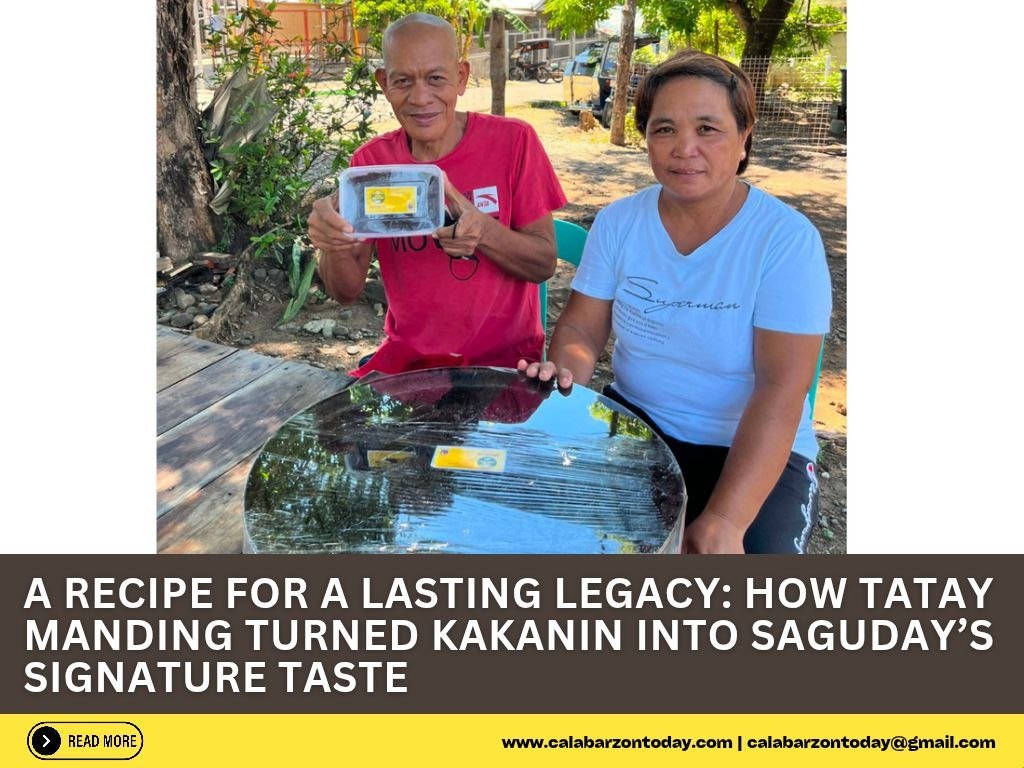
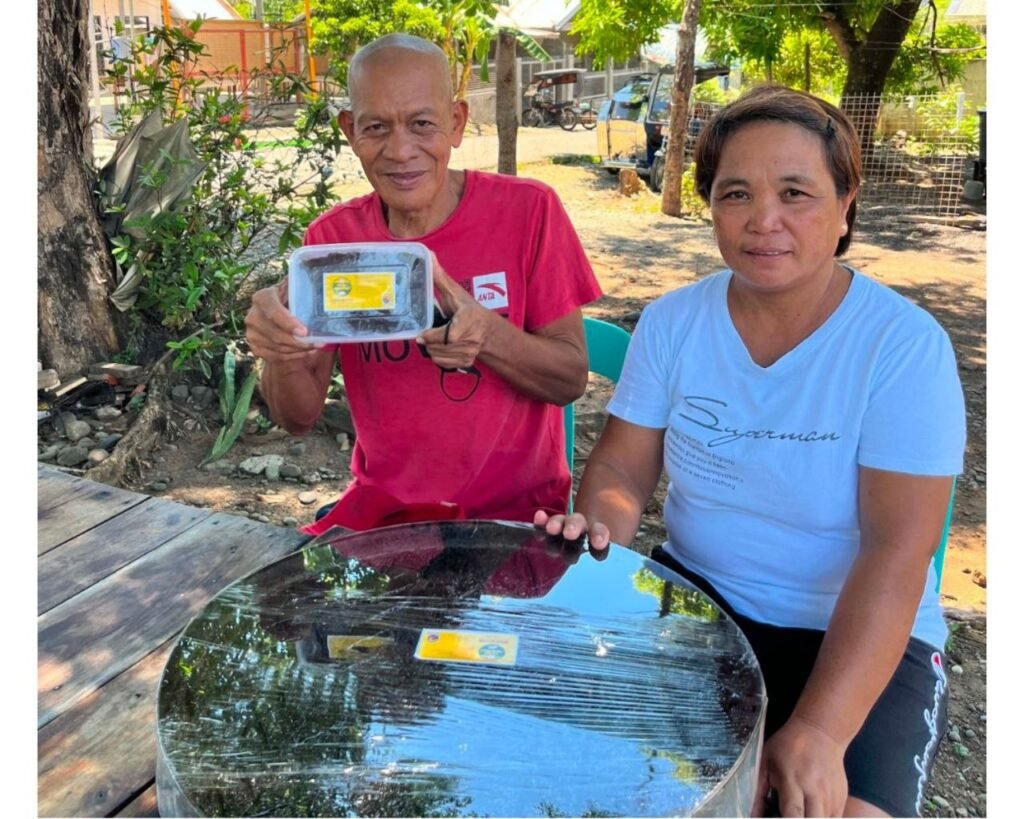
From a homemade afternoon snack to a thriving family business, Armando “Tatay Manding” Japones has spent decades preserving a traditional recipe and a legacy passed down by his parents.
Every specialty dish has a story.
For Armando Japones, fondly known as Tatay Manding, that story begins with patience, tradition, and a deep commitment to getting every batch right.
In Saguday, Quirino Province, his bibingkang kanin, kalamay, puto, and kutsinta have become more than traditional Filipino delicacies. They have become part of the town’s culinary identity and a source of pride for his family.
But behind every piece of kakanin is a story of perseverance.
From family tradition to a small business
Tatay Manding grew up helping his parents prepare kakanin. He did not learn the craft from culinary school or a commercial recipe book. Instead, he inherited it from his family and learned through years of hands-on experience.
In 1990, after he got married, he and his wife began selling their homemade bibingkang kanin.
It started simply.
One afternoon, while enjoying their homemade bibingka, they decided to sell the extra pieces to their neighbors. The response was encouraging, so they began selling door to door the following day.
While Tatay Manding stayed home to prepare the kakanin, his wife carried a single bilao around the neighborhood.
The distinct taste quickly caught the attention of their neighbors.
Soon, customers began asking for more, and the couple expanded their products to include kalamay, puto, and kutsinta.
What began as an afternoon snack gradually became a livelihood for their growing family.
A pause, then a fresh start
Raising five children, however, meant facing financial challenges.
To help fund their children’s education, Tatay Manding’s wife worked abroad. With her away, he had to temporarily stop their growing kakanin business.
When she returned in 2010, the couple had already used their overseas savings to finance their children’s schooling.
They were left without capital to restart.
That same year, they became clients of CARD MRI Rizal Bank, Inc. (CARD RBI), a microfinance-oriented rural bank. Through the institution, they were able to rebuild their savings.
In 2011, Tatay Manding took his first loan from CARD RBI and used it as capital to revive their kakanin business.
That same year, they officially registered the business with the Department of Trade and Industry (DTI).
For the couple, the loans became an important financial lifeline.
During difficult periods, Tatay Manding also took short-term loans to help cover his children’s education, paying them back using income from their daily sales.
Because they consistently paid their loans, they eventually gained access to higher loan amounts, which they used to sustain and expand the business.
Their products eventually reached other municipalities across Quirino Province.
When a recipe becomes a town’s identity
Over the years, Tatay Manding’s kakanin developed a distinct identity.
Its flavor became recognizable not only to their customers but also to the wider community.
In 2024, their special bibingka and family story were featured in Spectrum, the official newsletter of the Saguday Local Government Unit (LGU), highlighting their product as an authentic flavor of the town—a taste of home and heritage and a symbol of family unity and success.
Their kakanin have also won numerous provincial delicacy contests, consistently taking first place.
For the community, Tatay Manding’s kakanin had become more than food. It had become part of Saguday’s story.
Protecting the original taste
As the product became more popular, however, another challenge emerged.
Some customers bought their kakanin, removed the labels, and sold them under different names. Others produced their own delicacies and falsely marketed them as Tatay Manding’s.
But loyal customers knew the difference.
They could recognize the authentic taste and helped expose the imitations.
“Haan met kun Tatay Manding ditoy.” This isn’t Tatay Manding’s.
The experience reinforced something Tatay Manding already knew: the value of their product was not only in its name, but in the traditional process and recipe behind it.
That belief was tested when a businessman once offered him PHP 50,000 in exchange for his secret recipe so the kakanin could be mass-produced.
He refused. For Tatay Manding, the recipe was not simply a business secret. It was a family legacy inherited from his parents—one he wanted to protect and eventually pass on to his children.
Instead, he offered to become the businessman’s wholesale supplier, allowing the products to be resold while retaining the Tatay Manding brand.
A tradition that cannot be rushed
Producing their kakanin remains labor-intensive. The family continues to use traditional cooking methods that require careful preparation and slow cooking.
When a bulk order is scheduled for the following day, Tatay Manding and his family begin preparing the products a day ahead to ensure freshness and the right texture.
The process takes time.But that is exactly what Tatay Manding believes makes their products special.Their kakanin cannot be rushed.Just like the legacy behind it.
From one bilao to international buyers
Today, Tatay Manding’s kakanin receive bulk orders from cooperatives, major companies, and even international buyers who resell their products in Macau and Hong Kong.
From selling a single bilao around their neighborhood, their products now reach neighboring provinces in Quirino and generate approximately PHP 30,000 in monthly income.
The business has also helped improve their family’s quality of life.All but their youngest child are now married, and the couple owns an e-bike that helps them deliver their products more efficiently.
For Tatay Manding, however, growth must always come with discipline.He considers microfinance a tool for growing the business, not a burden.“Nu ag-loan ka, siguraduen nga pampalawaem ta negosyom.” If you’re going to take a loan, make sure you are able to expand your business. He also stresses the importance of being a good payer and making loan repayment part of the budget.
The next chapter
Tatay Manding and his wife are not stopping here.They plan to improve their product packaging to strengthen their brand identity. They also hope to establish a localized food cart as their storefront and eventually make their business available for franchising.
For now, they continue doing what they have done for decades: preparing kakanin the traditional way, one batch at a time.Because much like their signature bibingkang kanin, their success was never made in a hurry.
It was built through patience, hard work, discipline, and faithfulness to a tradition. Tatay Manding and his wife did more than build a business.They protected a family recipe, preserved a piece of their heritage, and turned a humble homemade delicacy into a taste recognized by an entire community.
And with every slow-cooked batch, they continue passing that legacy forward.
A recipe for good kakanin may take hours. A recipe for a lasting legacy can take a lifetime.

- CALAX Nears Completion as Work Continues on Final Sections - October 10, 2026
- LegisHear brings legislative consultation to Laguna - October 9, 2026
- PNP Strengthens CALABARZON Response Capability with 130 Motorcycle Units - October 8, 2026
About the Author